The Unified Competition Model 13 de nov. de 2026
The Unified Competition Model
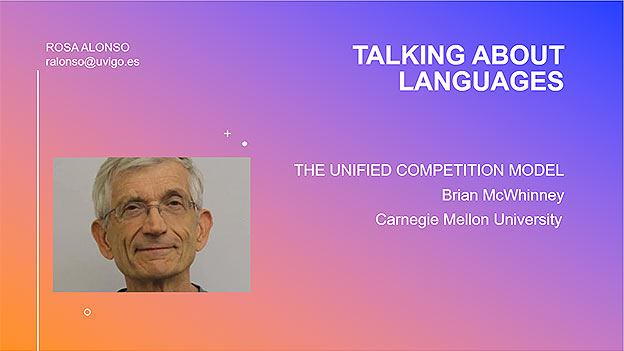
This interview with Brian MacWhinney examines the Unified Competition Model (UCM). It begins by discussing the evidence for critical and sensitive periods in language development and whether puberty and neurobiological changes affect the capacity to learn additional languages. It also discusses evidence showing that L2 learning remains possible throughout the lifespan and questions whether the notion of a critical period adequately captures the complex relationship between age and SLA.The discussion then turns to the UCM, examining how it developed from the original Competition Model and how it seeks to account for language learning, bilingualism and language processing within a common framework. Key concepts such as cue competition and weighting, entrenchment, transfer, resonance, decoupling, proceduralization, chunking and participation are explored. The interview also addresses major criticisms of the model. Finally, it considers what evidence might falsify it, and how its mechanisms could help explain contemporary forms of out-of-school English learning. The interview concludes with a discussion of future directions for MacWhinney’s work with TalkBank.